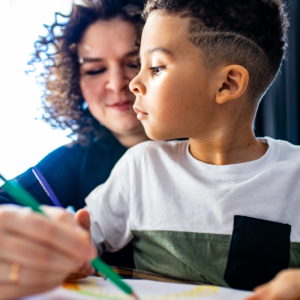
Family game night is a great way to practice social skills in a supportive environment while having fun! Building strong family connections also boosts youth mental health.
How to use this resource
This resource breaks down important social skillslike conflict resolution, communication, and understanding others’ perspectives or points of view.
Building Communication Skills
Playing games helps improve communication. You and your child can practice while playing – work together, talk through moves, and use body language to guess your opponent’s next move. Conflicts during game play are perfect for practicing assertive communication: communication that is both clear and respectful.
Tips:
Model active listening: make eye contact, avoid interrupting, limit distractions, and ask questions.
Set guidelines on what positive communication looks like during games. Here are some ideas:
No name calling or insulting other players
Encourage each other during hard times with phrases like, “You got this!”
Celebrate success with phrases like, “Great work!” or “Smart move!”
Think about how everyone can provide helpful feedback to one another. Try the sandwich method, which starts with something they’re doing well, then a suggestion for what could be done differently, and then another positive comment.
Suggested Games:
Games best for practicing communication include:
Charades
20 Questions
Chain Link Story or Group Storytelling
Telephone
Building Empathy and Perspective Taking (seeing others’ point of view)
Empathy and understanding others’ feelings and viewpoints help us to put ourselves in the shoes of others. These are key to good social skills because they help you understand what the other person wants and needs. It can also help us be more aware of the impact of our own actions. Playing games together helps you see things from others’ perspectives and can make us better players.
Tips:
Let everyone share their ideas or what they think your team should do next.
In games that require strategy, pause to talk aloud and reflect. Ask questions like:
“What do you think is the problem?”
“How might the character be feeling about this problem?”
“Did anyone see this differently?”
“What do you think we should do next? What might happen if we do that?”
Suggested Games:
Games that help practice empathy and seeing others’ points of view include:
What Would You Do?
Role playing games
Narrative video games
Building Trust and Practicing Setting Boundaries
Trust and boundaries help us to feel safer and more comfortable sharing our feelings and can help stop conflicts from getting worse. Games are a great way to practice this. Learning to trust one another will lead to safer, more successful, more joyful play.
Tips:
Review and change the game rules together. Make sure everyone understands the rules.
Talk about – and agree to – fair play and good sportsmanship. Examples of good sportsmanship might include things like following all rules, encouraging other players, being humble after winning, and being a “good” loser by accepting the loss and congratulating the winner.
Ask your child about their boundaries on competitiveness, language, and behaviors while playing.
Set consequences for cheating, rule breaking, or showing poor sportsmanship. Hold each other to them! This could be a warning, skipping a turn, or no longer being able to play the game.
Suggested Games:
Games that build trust and help set boundaries are games such as:
Trust walk or trust fall
Two truths and a Lie
Blindfolded games: blindfolded maze walk, pin the tail on the donkey
Building Self-Regulation
Self-regulation is how a person responds to the world around them. Practicing self-regulation skills helps us handle strong feelings, like excitement or anxiety about a game or losing.
Tips:
Remind your child about good sportsmanship.
Offer support if someone gets frustrated.
Take breaks to ease tension and come back to the game when everyone is feeling ready.
Model positive self-talk such as “Whoops! Maybe I’ll have better luck next time.”
Take deep breaths together during setbacks or mistakes.
Suggested Games:
For games that build self-management skills, search for games that practice handling emotions and controlling impulses such as:
Freeze Dance
Musical Chairs
Simon Says
Jenga
Building Teamwork and Collaboration Skills
Playing games together helps practice compromise, negotiation, and creative thinking.
Tips:
Help your child to see other people’s perspectives during a conflict.
Model being a neutral mediator. You can do this by helping to summarize what each person has shared, identify common ground, and giving options for moving forward. You may also choose to call for a break if tensions are high.
Decide on roles for game play. This is also a great way to help your child identify their strengths!
Debrief after the game on what went well and what could be better next time.
Suggested Games:
Games that build teamwork skills will be those that need negotiation, critical thinking, and shared decision-making such as:
When something scary happens in your home, community, or in the world, your child will look to you to help understand it. Having honest, developmentally-appropriate conversations with your child can help them develop coping skills, lessen the impact of strong negative feelings like anxiety or fear, and help them heal and grow.
For most children and teens
After a crisis, most children and teens need their parents and caregivers to:
Validate their feelings. When we validate someone else’s feelings, we let them know their feelings are normal, accepted, and don’t change our love for them. This can sound like, “Seeing that fire was really scary. It made me feel nervous, too.” or “I can understand that hearing us yell like that might have been really confusing.”
Help them identify their feelings. Naming feelings can help children build their emotional literacy, use coping skills, and better understand themselves. You can say things to help them notice their feelings like, “I can see that hearing about that shooting made you feel really nervous to go outside. Want to talk about it?” or “You’re throwing things, and that makes me think that hearing about Junior’s accident made you feel angry and out of control. Cuddling usually helps you when you’re mad. Should we try?”
Ask them what they know. This can help us get an accurate understanding of what they might be thinking, feeling, or wondering about. You can say things like, “Your teacher told me something scary happened at school today. Can you tell me about what happened?” or “I noticed you were listening really closely to the radio report this morning. What did you hear about?”
Limit news or media exposure to the event, especially for young and school-aged children. Continued exposure to scary or violent pictures or video can increase anxiety and fear. If you think it’s appropriate for them to hear updates about the event, talk to them about it yourself so that you can help them understand what’s going on.
Identify the helpers. Hearing about pain and suffering can cause us all to feel fear, anger, or a loss of control. Noticing the good that exists in the world, and that there are people who offer love, support, and care during crisis is an important part of healing and growth.
Use simple, honest, developmentally–appropriate language. When children hear something that is difficult for them to understand, they may fill in the gaps with their own ideas, which may be worse than reality and cause more anxiety. For this reason, it’s important to give children honest information that they can understand, and give them the opportunity to ask questions.
For Younger Children
In addition to the above suggestions, you can support children under age 7 or so by offering extra reassurance and attention following a crisis.
Reassure them they are safe. Though there are limits to how much control we have over safety, we can reassure children that they are safe in the moment, loved, and looked after.
Offer extra attention and love. This might include more time playing together, cuddling, and doing things you both enjoy.
When you leave them, be sure to let them know where you are going and when you’ll be back.
For School-Aged Children
Extra love and reassurance is important for this age group as well. You can also support your school-aged child by:
Ask them what they know and how they feel about it. You might say something like, “I noticed you were listening to me talk to the neighbor. What did you hear us talk about? What questions do you have?” or “How are you feeling after seeing that on the news?”
Help them name and express their feelings. It’s normal to have a range of reactions to something scary, overwhelming, or confusing. You can help your child make sense of this by normalizing it and helping them name or express their feelings. You can do this by encouraging them to draw or write about their experience, or notice what you’re seeing. This might sound like, “You seem to be really quiet since yesterday, and I’m wondering if you’re feeling scared. What do you think?”
Identify the helpers, and help them identify how to find helpers. In addition to talking about who in their community is helping after a crisis, you can help your child feel safer by talking to them about what they can do if they’re in an unsafe situation. This might sound something like, “I know it was scary when you couldn’t find me at the fair. If that every happens again, you should find a grownup in charge and stay where you are” or “Hearing about that school shooting was really scary. Let’s talk about what you know about keeping yourself safe.”
For Teenagers
Teenagers can be less likely to reach out to their parents for support after a crisis, but you can still support them by keeping yourself available and being available. You can also:
Teach them that all feelings are OK, and help them find safe ways of expressing those feelings. Crises can bring up big, complicated feelings, and teenagers feel very deeply. Oftentimes stress and challenge can push teens to either isolate or engage in risky behaviors. Teaching healthy ways of coping is an important part of helping your teen navigate difficult situations. This might be encouraging them to use exercise or movement to deal with big feelings, to spend time with friends, or to do activities that bring them joy.
Encourage them to stay connected with friends. Teens look to their friends for comfort and understanding, and spending time with friends can help teens feel safe and loved.
Ask open-ended questions to explore their experiences, feelings, and worries. This might sound like, “What was that like for you?” or “What are you most worried about now?” or “How can I help?”
Be mindful of how much media coverage of the event they are watching or following on social media. Teens may have more independent access to media than younger children. If limiting this isn’t right for your family, keep the lines of communication open by asking them about what they’re watching and wondering about. You can also help them notice whether looking at that content is making them feel better or worse.
When to Worry
It is normal for children and teens to have emotional and physical reactions to stressful situations. Depending on the situation, your child’s reaction may last only a few hours, a few days, or much longer than that. You may notice that your child is:
More clingy or demanding.
More withdrawn or more hyperactive than usual.
More irritable, tearful, fearful, or more likely to have outbursts or tantrums.
Showing regressive behavior, or doing things more typical of younger children. This might be behaviors like bedwetting, tantrumming, or “baby talk.”
While these are normal reactions to stress, change, and strong feelings, you know your child best. If you notice any of these signs for a prolonged period, or if you’re worried for your child’s health or safety, reach out to a medical professional.
Online platforms are places where teens can hang out with friends, find information, and enjoy entertainment. They can also support mental health and wellbeing activities. However, there are risks like cyberbullying. It’s crucial for teens and parents to recognize what cyberbullying is, understand its consequences, and know how to deal with it. This helps ensure safe use of social media, messaging apps, forums, and gaming communities online.
What is cyberbullying?
Cyberbullying is when someone repeatedly uses online platforms or devices to hurt others. This behavior can involve a power difference, like social status or tech skills.
Recognizing It
Cyberbullying can vary depending on the platform:
Sending threatening messages repeatedly.
Creating fake accounts to spread lies or harmful messages.
Blackmailing someone or sharing private information.
Sending unwanted sexual messages or pressuring others to do so.
Excluding someone from discussions or games to hurt them.
Insulting or threatening others.
Sabotaging game progress unfairly.
Sharing embarrassing videos or making fun of mistakes.
Consequences
Cyberbullying can seriously affect teens’ mental health, leading to issues like anxiety, depression, and loneliness. It’s important to be aware of these risks.
Legal and Safety Measures
Cyberbullying can have legal consequences, and each state has different laws. Many schools are required to investigate and respond to bullying incidents.
Being a Responsible Online User
Set guidelines for online behavior with your family, including screen time limits and privacy settings. Teach teens not to share personal information and to use online tools responsibly.
Partnering with your child’s school is essential for getting them access to strong support. Knowing what to ask for can help. Consider these suggestions for steps you can take to get your child the support they need.
I have concerns about my child’s academic progress…now what?
Schedule a meeting with your child’s teacher. Arrange a meeting with your child’s teacher to discuss your concerns. Ask what they see as your child’s strengths and challenges in the classroom, and how they are differentiating instruction. Differentiating instruction is when teachers teach in a way that meets the needs of different students. This might be something that your child’s classroom teacher can provide, and might not be.
Ask for an RTI (response to intervention). You can request an RTI through your child’s teacher. An RTI plan helps your child’s teachers identify the specific areas your child is struggling in and outline specific strategies and interventions that will be implemented to support your child’s academic needs. Your child’s team at school should monitor progress closely, and you can determine how you want to be kept informed.
Request an evaluation. If you suspect that your child may have a learning disability or other educational needs and that an RTI will not be enough, you can request a formal evaluation from the school’s special education department. This evaluation can help identify any areas where your child may need additional support.
I have concerns about my child’s social-emotional development…now what?
Identify your concerns. Identify what concerns you have regarding your child’s social-emotional wellbeing. This might include things like excessive worrying, difficulty making friends, mood swings, or excessive aggression. Take note of what this looks like for your child, when they are most affected, and what intervention strategies work and don’t work.
Reach out to your child’s school. Contact your child’s teacher or school social worker to discuss your concerns. They can provide valuable insights into your child’s behavior and social interactions at school and may be able to offer support or resources. For more about the types of support staff that might be available, see Who’s Who in a School.
Seek professional help if needed. If you believe your child’s social-emotional challenges may require intervention beyond what the school can provide, consider seeking out a counselor or therapist who specializes in working with children. Your pediatrician or school social worker can provide you with recommendations or referrals.
Model positive behavior. Be a positive role model for your child by demonstrating healthy social-emotional skills, such as effective communication, empathy, and problem-solving. Show them how to navigate challenging emotions and situations in constructive ways.
Be supportive. This is likely a challenging time for your child, too. Let your child know you are there for them, that you love them unconditionally, and that you will support them.
I have other concerns about my child…now what?
Document your observations. Keep a record of specific instances or behaviors that raise concerns about your child’s speech, fine motor, or motor skills. Note any patterns or milestones that your child may be missing.
Consult with professionals. Reach out to your child’s pediatrician to discuss your concerns. They can provide guidance and may refer you to specialists such as speech therapists, occupational therapists, or developmental pediatricians for further evaluation. You should also reach out to your child’s school and ask to get connected with the speech therapist, occupational therapist, and/or physical therapist, so they can get to know your child at school and determine if further support or evaluations are needed.
Request an evaluation. You have the right to request an evaluation from your child’s school in order to help identify any areas of delay or difficulty and guide intervention strategies.
Monitor progress. Regularly monitor your child’s progress and communicate with therapists, educators, and other professionals involved in their care. Adjust interventions and strategies as needed based on your child’s development and feedback from professionals.
Parenting is challenging, and supporting your child through difficult times can be overwhelming. Identifying your concerns and reaching out for support are actionable steps you can take towards getting your child the support they need to thrive.
The Parent and Child Mental Health Survey asked more than 1,000 parents and caregivers from across the country what worries them most about their children’s health and what would help resolve those concerns. The survey was designed to understand parents’ perceptions of safe and supportive school environments and schools’ role in providing support and resources for youth mental health.
Key findings include:
Nearly two-thirds of parents want training to better understand and support their child’s mental health and well-being.
Nearly 80% of parents believe schools should provide an employed mental health professional at their school.
Nearly 70% of parents indicated that their child feels safe and supported at school when there is at least one trusted adult they can talk to.
95% of parents support schools including programs that promote diversity and inclusion and teach social skills, such as respect, cooperation, perseverance and empathy.
The majority of parents responded that a safe and supportive school environment was associated with transparent communications, engaged school counselors and social workers, emotional social skills and physical safety.
The biggest obstacle for kids getting help with mental health at school, according to parents, is the child themself thinking they do not need it.
“It’s clear from our latest survey that while parents are deeply concerned about their children’s mental health and safety at school, there’s a significant demand for more resources to address these issues,” says Rob Bisceglie, Executive Officer & President at Action for Healthy Kids. “We must prioritize creating environments where all students feel safe, supported, and understood, and parents need to know that they’re not alone.”
While a majority of the respondents shared top concerns about mental health, physical safety at school and time on electronics, there were some reported differences among ethnic and racial groups and across grade levels:
Parents identifying as Black/African American and Hispanic were more likely to report being worried more about their child experiencing racism at school. Of the parents surveyed, 58% of those identifying as Black/African American and 45% of those identifying as Hispanic reported being worried about their child experiencing racism at school, whereas 22% of those identifying as White worried about their child experiencing racism at school.
Parents of high school students were more likely to worry about school violence than parents of middle school and elementary students. Of the parents surveyed, 74% of high school parents reported being worried about a student or another individual bringing a weapon to school, compared to 64% of middle school parents and 63% of elementary school parents.
Parents who identify as Black/African American and Hispanic were more likely than White parents to be concerned about their child being behind academically. Of the parents surveyed, 56% of parents identifying as Black/African American and 54% of parents identifying as Hispanic reported being concerned about their child being behind academically, compared to 40% of parents identifying as White.
Parents of high school students were more likely to report being worried about their child struggling with mental health. Of the parents surveyed, 69% of high school parents reported being worried about their child struggling with mental health, whereas 63% of elementary school parents and 64% of middle school parents reported being worried about their child struggling with mental health.
“We’re seeing what parents are seeing. Despite the need, school-based mental health services are not always readily available. This is why it is critical that schools are increasing their focus on strategies that prevent mental and behavioral health problems,” said Dr. Kathleen Ethier, CDC’s Division of Adolescent and School Health Director.
This is the first in a series of surveys exploring parents’ mindsets commissioned by Action for Healthy Kids in partnership with the CDC Foundation. Download the full Parent and Child Mental Health Survey.
Action for Healthy Kids is using these findings to create free resources for parents, including fact sheets, conversation starters, videos, blog posts, targeted social media posts, webinars and a digital resource library.
“Our kids need to feel safe and supported at home and at school,” said Catherine Zilber, Vice President for Infectious Disease Programs at the CDC Foundation. “The findings from this survey highlight that parents want training so they can better understand and support their child’s mental health and well-being. By providing parents and caregivers with free resources, they can acquire the knowledge and skills necessary to create a nurturing environment that promotes positive mental health for their children.”
ABOUT THE SURVEY
Action for Healthy Kids conducted a 48-question online survey of 1,016 parents and guardians across the U.S., from both rural and non-rural areas, with children enrolled in public K-12 schools. The survey was fielded in English and Spanish in December 2023. This survey represents the first wave of the project.
This project on Improving Mental, Behavioral and Academic Supports to Students and Families, Part 2 is supported by the Centers for Disease Control and Prevention of the U.S. Department of Health and Human Services (HHS) as part of a financial assistance award totaling $434,555 with 100 percent funded by CDC/HHS. The contents are those of the author(s) and do not necessarily represent the official views of, nor an endorsement, by CDC/HHS, or the U.S. Government.
ABOUT ACTION FOR HEALTHY KIDS
Action for Healthy Kids is dedicated to improving children’s health and well-being by bringing together and mobilizing educators, families, and other key stakeholders to help children lead healthy lives. Through its core programming and family-school partnerships, Action for Healthy Kids has impacted more than 20 million children in 55,000 schools nationwide to address systemic challenges in underserved communities. To learn more about its growing network of volunteers and champions, visit actionforhealthykids.org.